
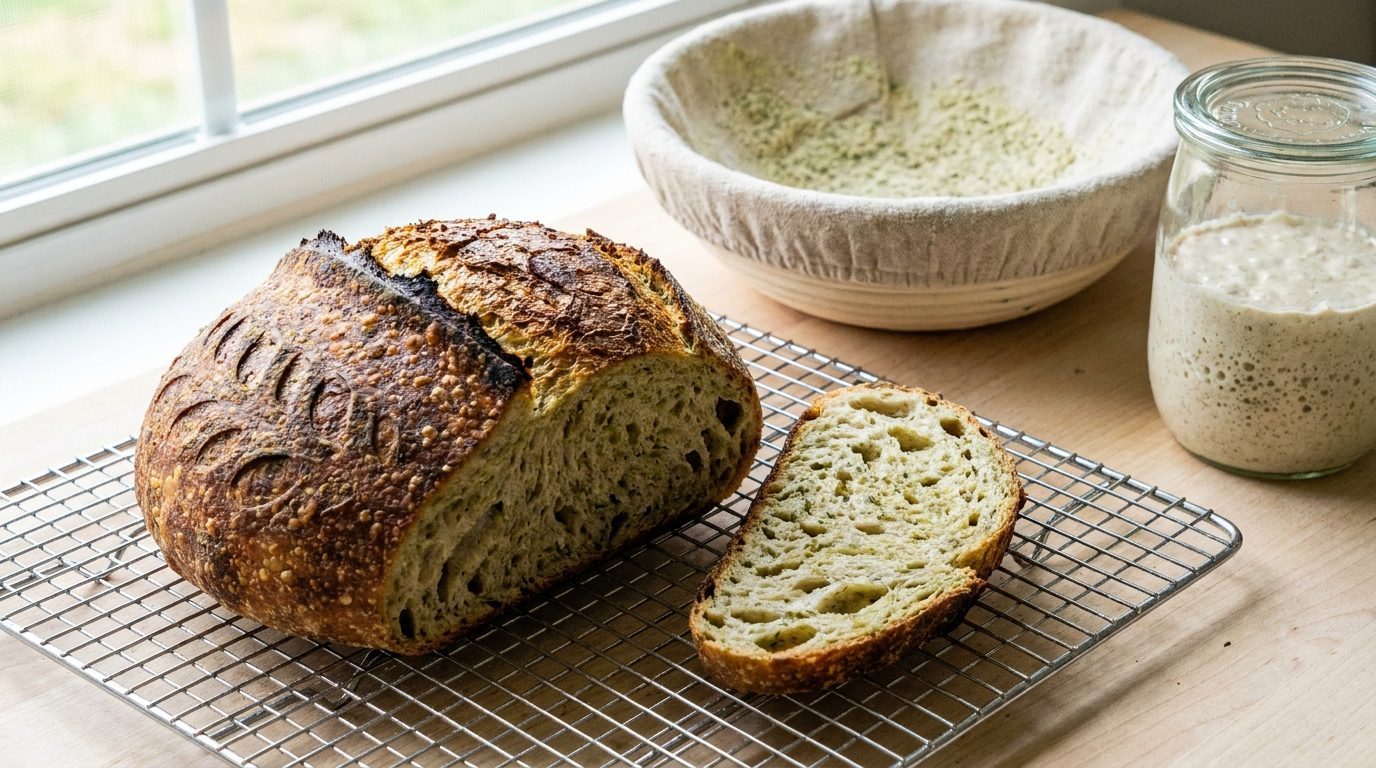
Hemp flour and sourdough get along better than most gluten-free-adjacent pairings, because sourdough's long fermentation softens exactly the qualities that make hemp flour difficult: density, thirst, and assertive flavour. The rule is still the rule, though: hemp is a partner in the dough, never the dough.
The working formula
Start at 10 to 15 percent hemp flour against strong bread flour, which is more conservative than the muffin-friendly top of the 10 to 25 percent rule. Sourdough needs gluten development that hemp cannot contribute, and crossing 20 percent costs you oven spring quickly. A reliable first loaf: 450 g bread flour, 50 g hemp flour, 375 g water, 100 g active starter, 10 g salt.
Adjustments that matter
- Water. Hemp flour drinks. Add 5 to 10 percent more water than your base recipe, added during mixing rather than all up front.
- Fermentation watch. Doughs with hemp ferment slightly faster in our experience; the extra minerals feed the culture. Judge by dough state, not the clock.
- Tighter shaping. A hemp dough relaxes more; an extra coil fold and a firm final shape keep the loaf tall.
- Darker bake. The crumb is already tan from the hemp; do not mistake colour for doneness. Bake to temperature, around 96 C internal.
What the loaf is like
Expect a moist, slightly tighter crumb, a nutty-earthy flavour that reads as wholegrain rather than health food, and noticeably better keeping qualities; the fibre holds moisture into day three. Per slice you gain meaningful protein and fibre over a white sourdough, and the tang of fermentation rounds off hemp's grassy edge.
If it went wrong
A flat loaf almost always means too much hemp or too little structure: drop the percentage before blaming the starter. Gumminess means underbaked or sliced warm, both standard sourdough sins amplified by hemp's moisture retention.