
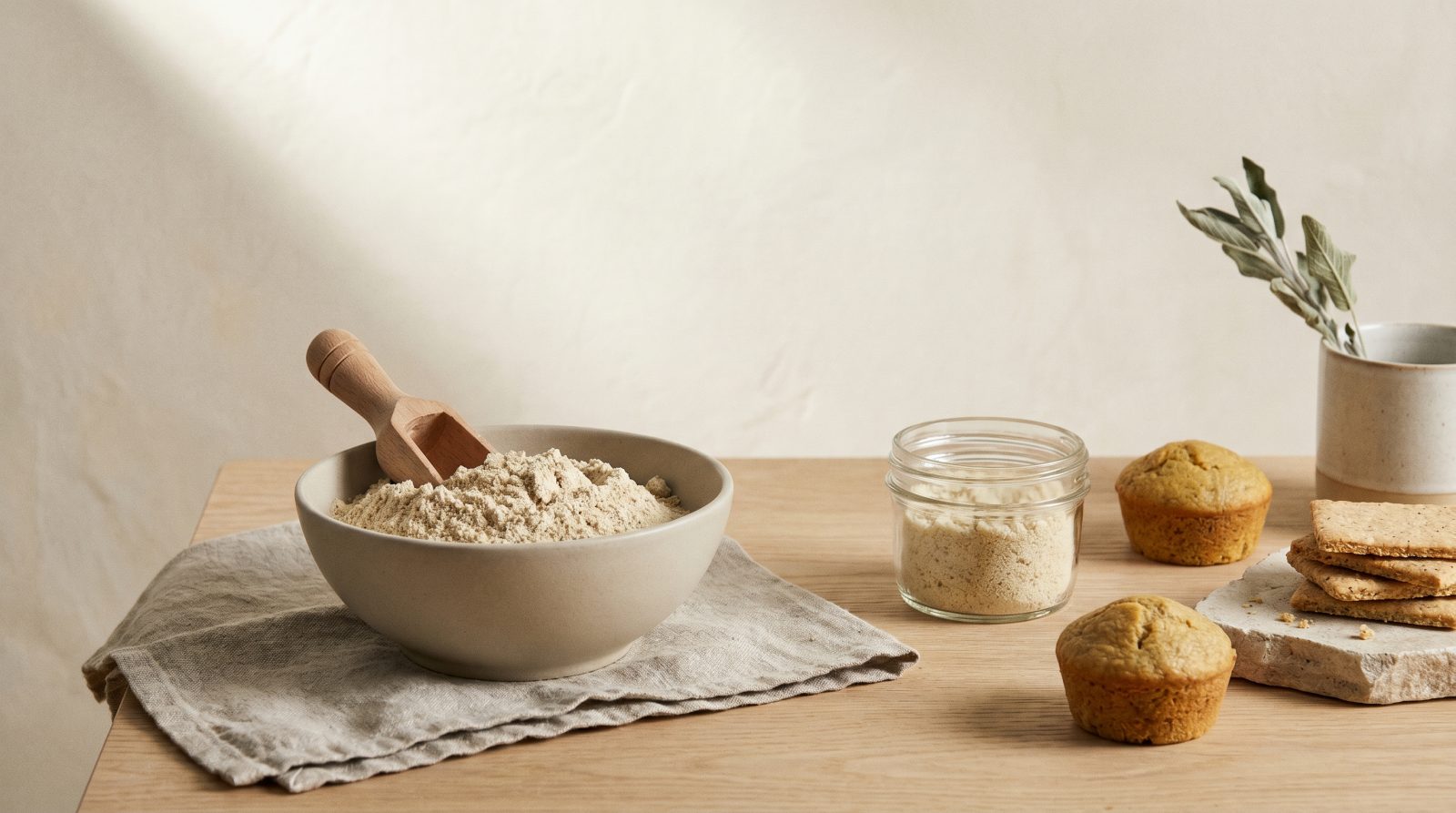
Hemp flour and almond flour are the two alternative flours most often reached for by health-conscious and gluten-free bakers. They are not interchangeable. Each behaves differently in the bowl and brings a different nutritional profile. Here is how to choose.
Nutrition head to head (per 30 grams)
| Nutrient | Hemp flour | Almond flour |
|---|---|---|
| Calories | ~120 | ~170 |
| Protein | 9-11 g | 6 g |
| Fibre | 7-12 g | 3 g |
| Fat | 3-4 g | 15 g |
| Carbohydrate | 7-9 g | 6 g |
| Complete protein | Yes | No |
The key difference in the bowl
Almond flour is high-fat and adds moisture and richness; it can carry more of a recipe because its fat substitutes for some of the binding role. Hemp flour is high-protein and high-fibre but low-fat, and it absorbs moisture, so recipes using it often need extra liquid. In practice, almond flour makes things moist and tender, while hemp flour makes them hearty and can dry them out if overused.
Where hemp flour wins
- Protein: more, and complete.
- Fibre: two to four times as much.
- Lower calories and fat: better when you want nutrition density without the fat load.
- Nut-free: safe for nut-allergic households, where almond flour is off the table.
Where almond flour wins
- Texture: produces a moister, more tender, more cake-like crumb.
- Milder flavour: sweeter and less earthy than hemp's grassy notes.
- Higher usage ratio: can form a larger share of a gluten-free recipe before texture suffers.
How to choose, or combine
Choose almond flour when you want a rich, tender, low-carb bake and nuts are not a concern. Choose hemp flour when you want maximum protein and fibre, a nut-free option, or lower fat. The best results often come from using both: almond flour for moisture and structure, a smaller proportion of hemp flour for a protein and fibre boost. Together they cover each other's weaknesses.