
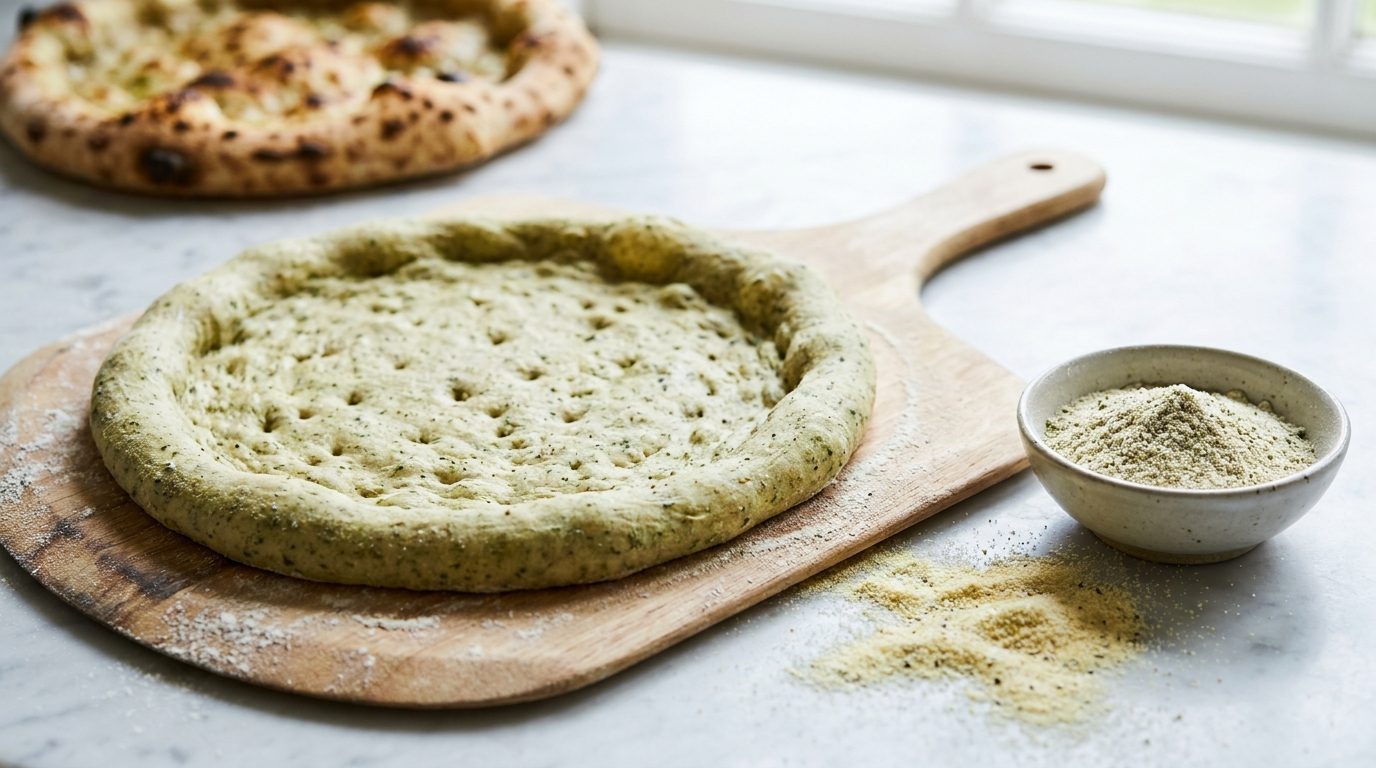
Pizza dough is the friendliest place to learn hemp flour: it is rolled thin, so structure matters less than in a loaf, and the toppings flatter hemp's nutty taste. At 15 to 20 percent substitution you get a crust with character and a quiet nutrition upgrade nobody at the table will identify.
The dough
For two 30 cm pizzas: 400 g bread or all-purpose flour, 80 g hemp flour, 320 g warm water, 7 g instant yeast, 10 g salt, a tablespoon of olive oil. Mix, knead to a soft smooth dough (it will be slightly tackier than all-wheat; resist adding flour), rise about an hour until doubled, divide, and rest 15 minutes before stretching.
Stretching and baking
Hemp dough tears a little more easily, so stretch with flat hands from the centre and stop at the first resistance rather than chasing paper-thin. Bake as hot as your oven goes, stone or steel if you have one. The crust browns faster than plain dough because of the hemp's colour and fats; check the underside a minute early.
Why it works
At one-sixth of the flour, hemp contributes protein and fibre per slice, a wholegrain-style flavour that stands up to strong toppings, and a tender chew from the fat in the flour. Above 25 percent the dough loses extensibility and the crust turns crumbly, the same boundary explained in the 10 to 25 percent rule.
Topping pairings
The crust's nuttiness pairs especially well with mushrooms, caramelized onion, squash, sage, and anything involving goat cheese. For a fully on-theme pie, finish with a post-oven drizzle of cold hemp seed oil and a scatter of hemp hearts, the same trick used in the three easy recipes.