
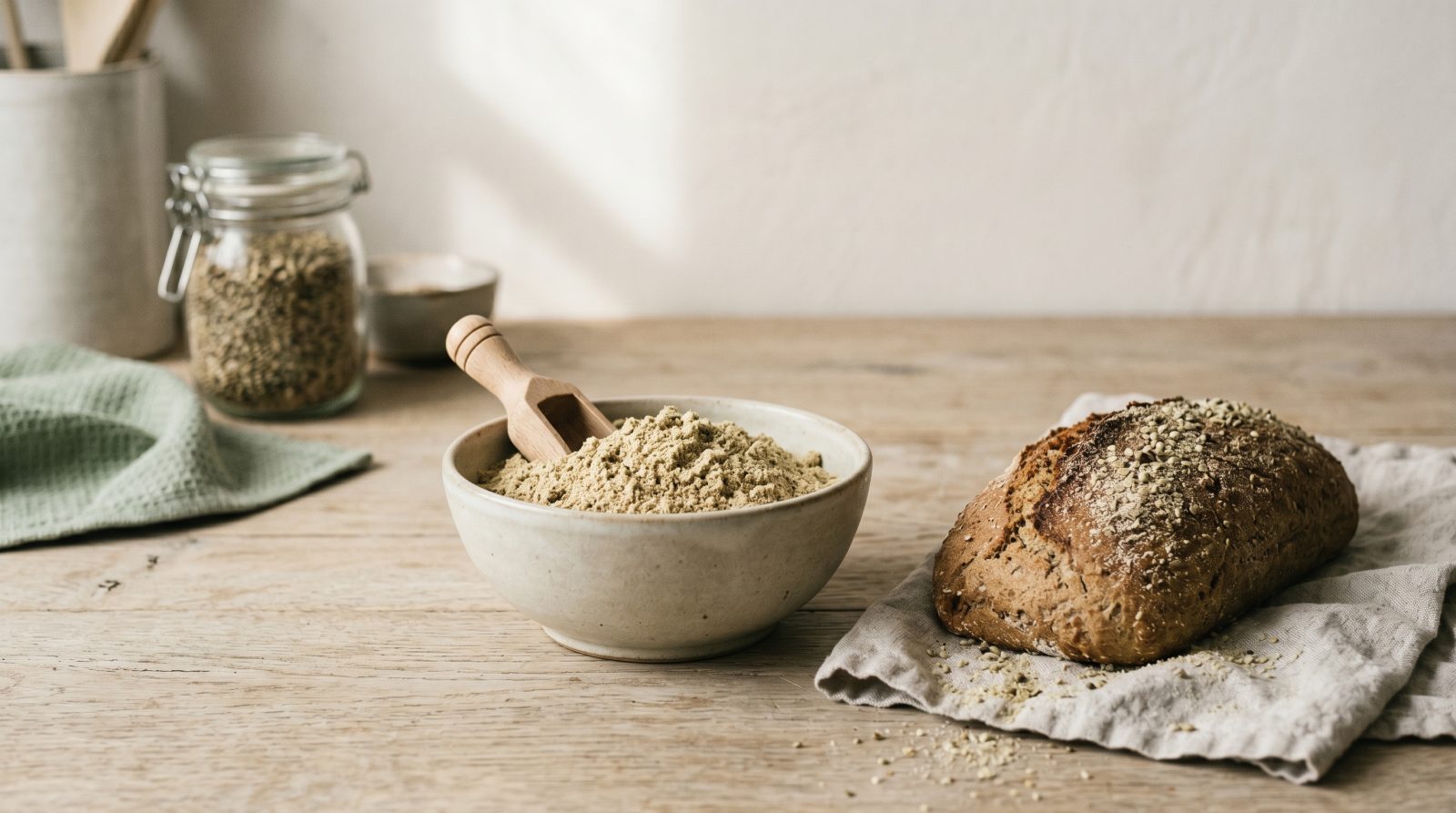
Hemp flour is naturally gluten-free, making it useful for celiac and gluten-sensitive consumers. However, hemp flour alone cannot replace wheat flour in most recipes; gluten-free baking requires blending hemp with other flours and using binding agents. The working approach is a blend: hemp flour for nutrition and flavour, structural flours for crumb, and a binder to do the job gluten left behind.
What makes gluten-free baking harder
Gluten provides two functions in baked goods: structural protein networks that trap leavening gas (giving bread its rise), and adhesive properties that hold the crumb together. Gluten-free flours individually have neither property. Successful gluten-free baking requires:
- Flour blends that combine starches (rice, tapioca, potato) for structure with higher-protein flours (almond, hemp, chickpea) for body
- Binding agents like xanthan gum, psyllium husk, or eggs to compensate for missing gluten adhesion
- Different mixing and resting approaches than wheat-based recipes
- Often more liquid and more leavening
Hemp flour's role in gluten-free baking
Hemp flour contributes:
- Protein (9g per 30g, complete amino profile)
- Fibre (7g per 30g)
- Minerals (iron, magnesium, zinc)
- Earthy, nutty flavour that complements many gluten-free formats
- Modest binding from its protein content
Hemp flour does not contribute starch or stretch; pair it with rice flour, tapioca starch, or potato starch for structure.
A reliable gluten-free flour blend with hemp
| Component | Proportion | Role |
|---|---|---|
| Brown rice flour | 40% | Structure, mild flavour |
| Hemp flour | 25% | Protein, fibre, nutrition |
| Tapioca starch | 20% | Binding, crispness |
| Almond flour | 15% | Moisture, richness |
| + Xanthan gum | 1/2 tsp per cup of blend | Gluten substitute |
Mix in larger batches and store in an airtight container. Used as a 1:1 wheat flour substitute, this blend produces acceptable quick breads, cookies, and muffins.
Cross-contamination considerations
For celiac consumers, hemp flour must be certified gluten-free (tested below 20 ppm gluten) to be safely consumed. Many hemp products are processed on shared equipment with wheat or other gluten-containing grains, introducing cross-contamination risk. Look for:
- "Certified Gluten-Free" labelling from a recognised certifier (Gluten-Free Certification Organization, Canadian Celiac Association certified).
- Dedicated facility statements on packaging.
- Brand testing protocols documented on websites.
Hemp grown alongside wheat in Prairie rotations can introduce residual wheat grains; reputable producers sieve and test to manage this.
Recipe approach for celiac safety
For celiac consumers, the simplest reliable approach is:
- Use a pre-mixed certified gluten-free flour blend that includes hemp flour, OR
- Build your own blend from individually certified gluten-free flours (including certified gluten-free hemp flour).
For mild gluten sensitivity (non-celiac), shared-facility hemp flour is typically acceptable if symptoms remain manageable. Individual tolerance varies.
Three gluten-free baking applications where hemp shines
- Gluten-free muffins. The blend above replaces wheat flour 1:1 in standard muffin recipes. Hemp contributes protein and prevents the gritty texture some all-rice GF blends produce.
- Gluten-free crackers. Hemp flour can be 30 to 40 percent of the total flour in cracker recipes; the lower fat content and high protein contribute to crispness.
- Gluten-free pancakes. Hemp at 25 percent of flour, combined with a 1:1 GF blend at 75 percent, produces pancakes with notably better protein content and a mild nutty flavour.