
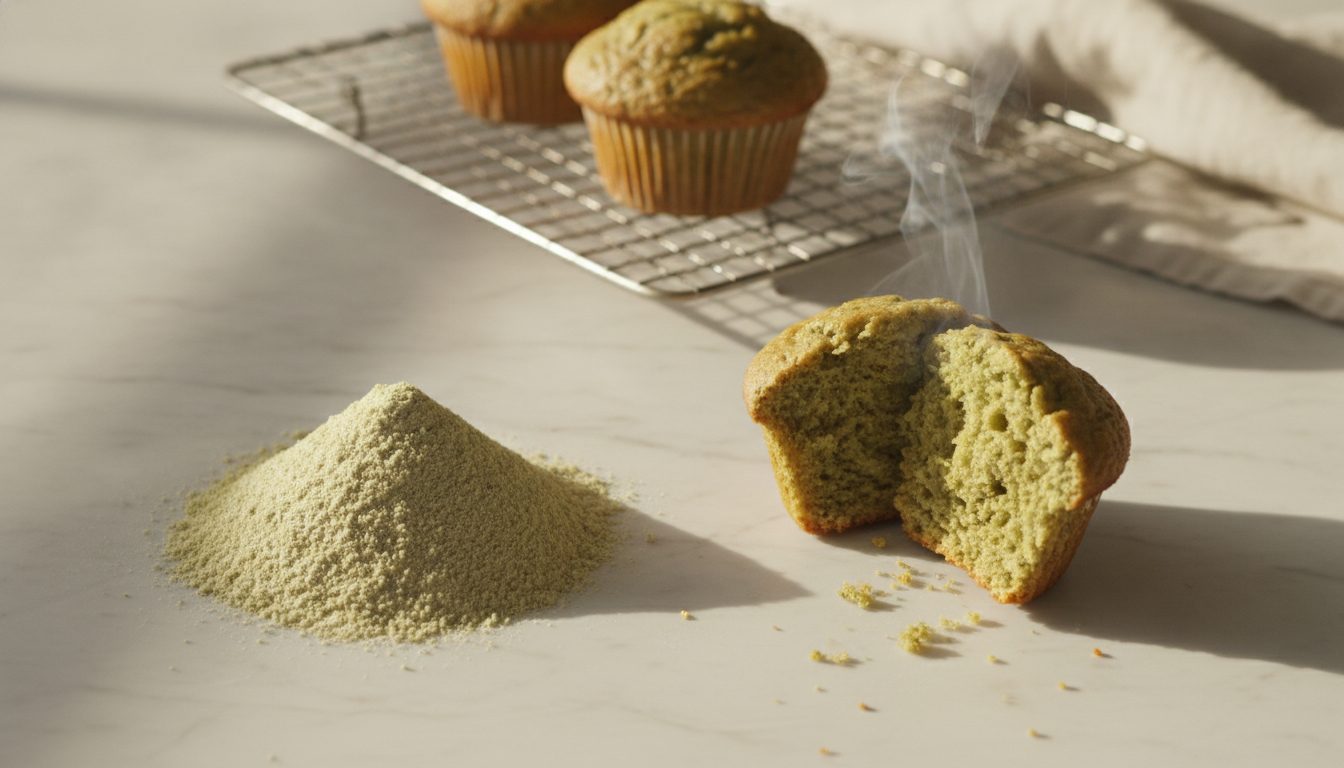
People buy hemp flour for the protein, fibre and fats, then immediately put it in a 190 degree oven and wonder whether any of it survived. The answer differs sharply depending on which nutrient you mean.
What heat does to food, in general
Cooking damages nutrients through three routes: chemical breakdown at high temperature, oxidation when heat and air work together, and leaching into cooking water. Baking largely avoids the third, so the question narrows to what heat and oxygen do to hemp's specific components over the twenty to forty minutes a typical bake takes.
It helps to hold two things separate. Baking is a short exposure at moderate temperature. Storage is a long exposure at low temperature. For hemp flour, the second turns out to matter more.
The fats are the vulnerable part
Hemp's fat is dominated by polyunsaturated fatty acids, principally linoleic acid and alpha-linolenic acid. Polyunsaturated fats have multiple double bonds, and double bonds are where oxidation attacks. This is the same chemistry that makes hemp seed oil a poor frying oil and a fast-spoiling one.
Two things soften the concern for hemp flour specifically. First, hemp flour is made from press cake, so most of the oil has already been removed. What is left is residual fat, not a fat-dominant ingredient. Second, the interior of a loaf or muffin does not reach oven temperature. It plateaus near the boiling point of water until the crumb sets, which is a far gentler environment than the surface.
Where the fats do take a beating is anything long, hot and open: extended high-temperature roasting, deep frying, or a thin cracker held in the oven until it darkens. Short bakes at moderate temperatures are comparatively kind.
Protein: denatured is not destroyed
Heat unfolds proteins. That is denaturation, and it is what makes an egg white set. It changes the shape of the molecule, not its amino acid content, and in many cases it makes the protein easier to digest rather than harder.
The one real caveat is browning chemistry. When proteins and sugars react at high temperature to produce colour and flavour, some amino acids get tied up in the process, and lysine is the one most affected. Since lysine is already hemp's limiting amino acid, heavily browned crusts represent a small loss. It is a genuine effect and a minor one, and it is another argument for baking hemp goods to golden rather than dark.
Fibre and minerals barely notice
Dietary fibre is not meaningfully degraded by home baking. The cellulose and lignin from the hull go into the oven and come out doing the same job. Minerals such as magnesium, phosphorus, iron and zinc are elements. They cannot be destroyed by heat at all, and because baking involves no draining water, they cannot be washed away either.
This is worth emphasizing, because fibre and minerals are a large part of what hemp flour contributes in the first place. The two nutrients most people are least worried about are the two that come through the oven essentially intact.
Vitamins are the unavoidable loss
Some vitamins are heat sensitive, and a proportion of them will degrade in any cooked food. Hemp flour is not a headline vitamin source to begin with, so this is a small loss on a small base. If your reason for buying hemp flour was vitamins specifically, the ingredient was probably the wrong choice regardless of how you cook it.
The losses that happen before the oven
Here is the part most articles skip. A bag of hemp flour left in a warm cupboard for six months has been oxidizing the entire time, slowly, in the presence of air and light. The cumulative fat damage from that can easily exceed anything a single bake does. Rancidity is a storage problem first and a cooking problem second.
Practical steps, in rough order of impact:
- Buy small quantities and use them within a few months rather than stockpiling.
- Store the flour sealed in the fridge or freezer, not in a pantry beside the oven.
- Squeeze the air out of the bag, or decant into a container that the flour actually fills.
- Bake at moderate temperatures and pull things at golden rather than deep brown.
- Keep the flour for recipes that are baked or cooked: Health Canada advises that flour is a raw ingredient meant to be cooked before it is eaten. For hemp's fats with no heat at all, use hemp hearts or hemp seed oil instead.
So is it still worth baking with?
Yes, comfortably. The fibre, minerals and amino acids that make up the bulk of hemp flour's nutritional contribution survive a normal bake. The fats degrade somewhat, more so at high heat and long exposure, but they degrade far more from months of poor storage, which is the variable you control most easily. If you want the full fat profile untouched, the answer is not to avoid baking, it is to also eat hemp hearts or hemp oil raw, where nothing is heated at all. More on how the flour behaves in the oven sits in the baking guides.
The single most useful change you can make is to move the bag out of the cupboard tonight. Refrigerated or frozen hemp flour, baked at moderate temperature to a golden rather than a mahogany finish, keeps very nearly everything you paid for. Warm-cupboard hemp flour baked hot loses on both counts, and you will taste the difference long before any nutrition panel could measure it.